Overview
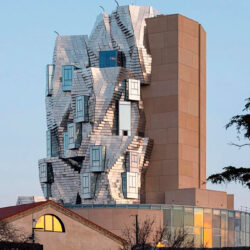
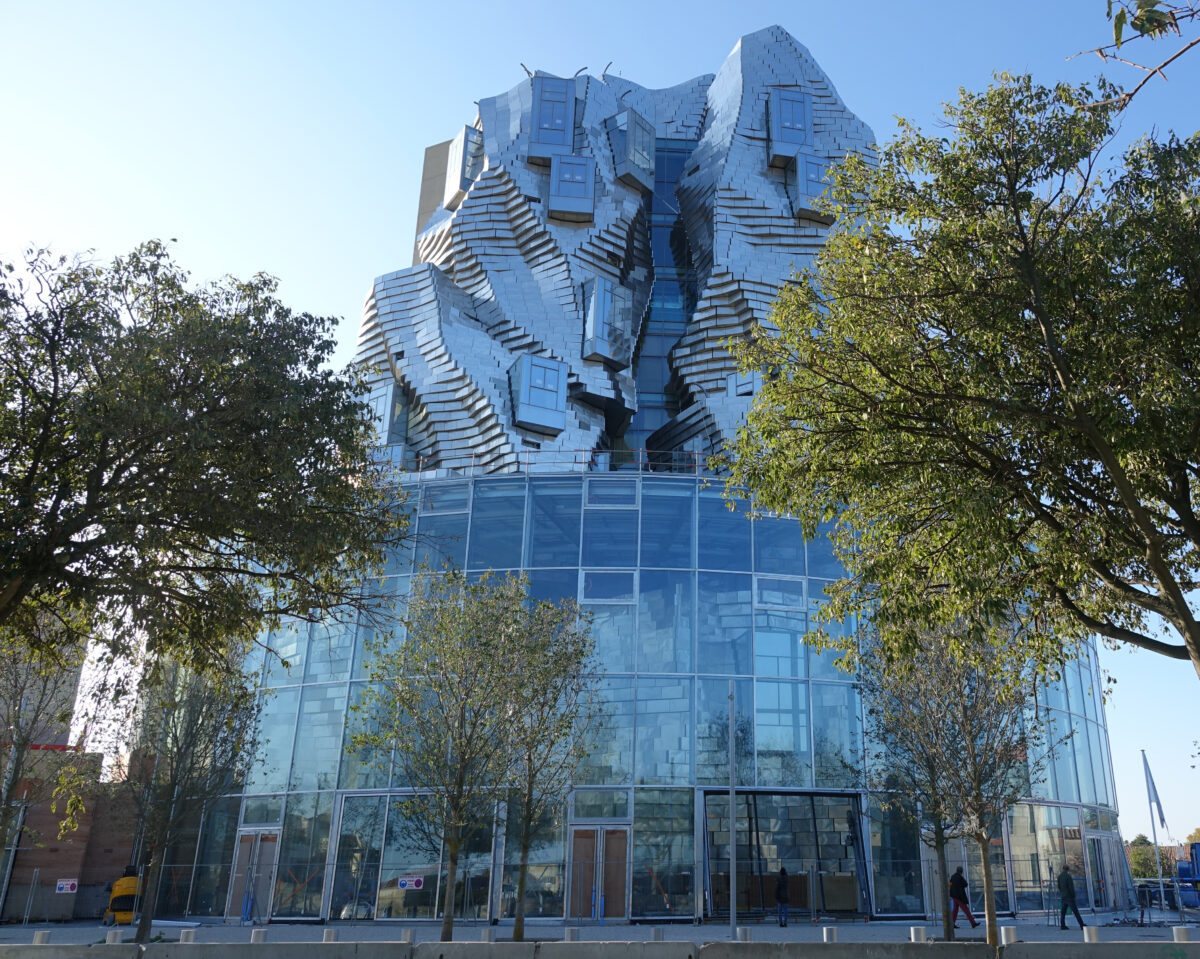
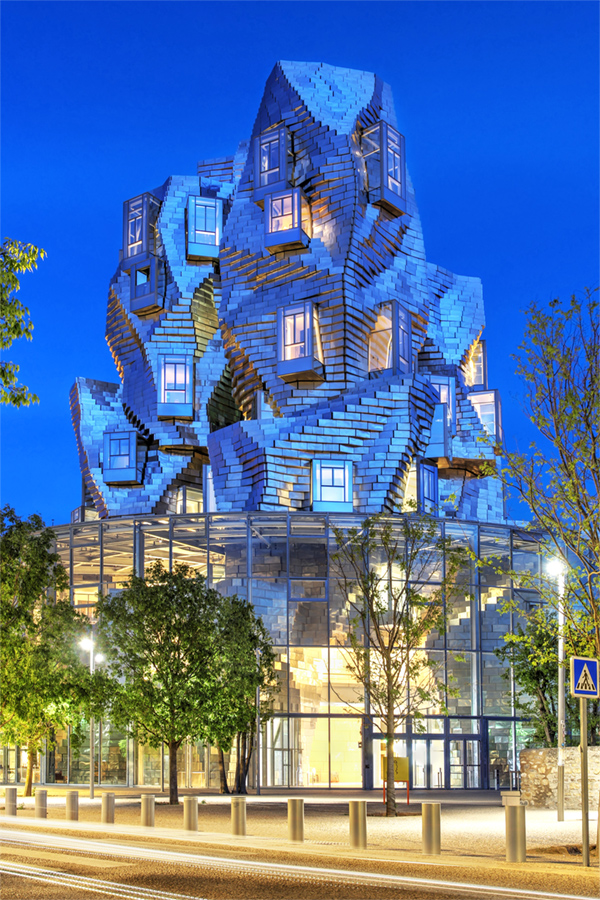
Designed by Frank Gehry, this architectural marvel is the crown jewel of the LUMA Foundation’s campus, a brainchild of Maja Hoffmann, blending architecture, art, nature, and design. Gehry’s vision, along with New York-based Selldorf Architects’ revamp of historic industrial buildings into a vibrant interdisciplinary hub, aims to energize Arles with new galleries, research centers, archives, workshops, and seminars.
Gehry’s design for the Guggenheim Museum in Bilbao sparked an unexpected renaissance for that city, and Arles anticipates a similar reinvigoration with this stunning new structure.
Location
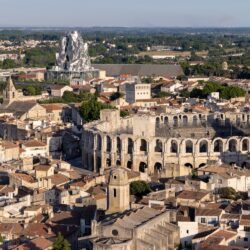
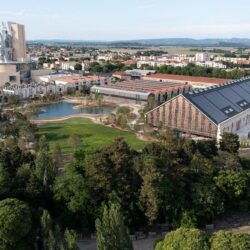
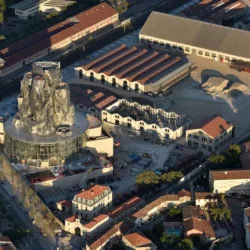
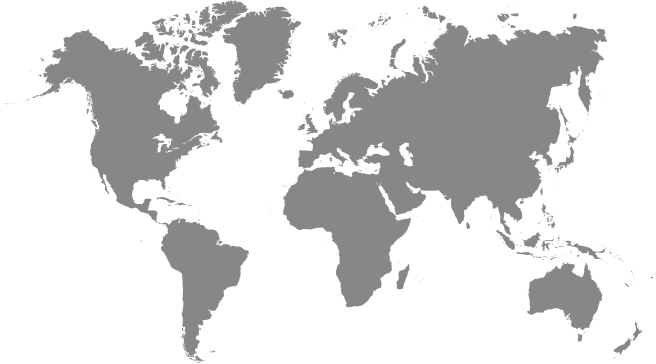
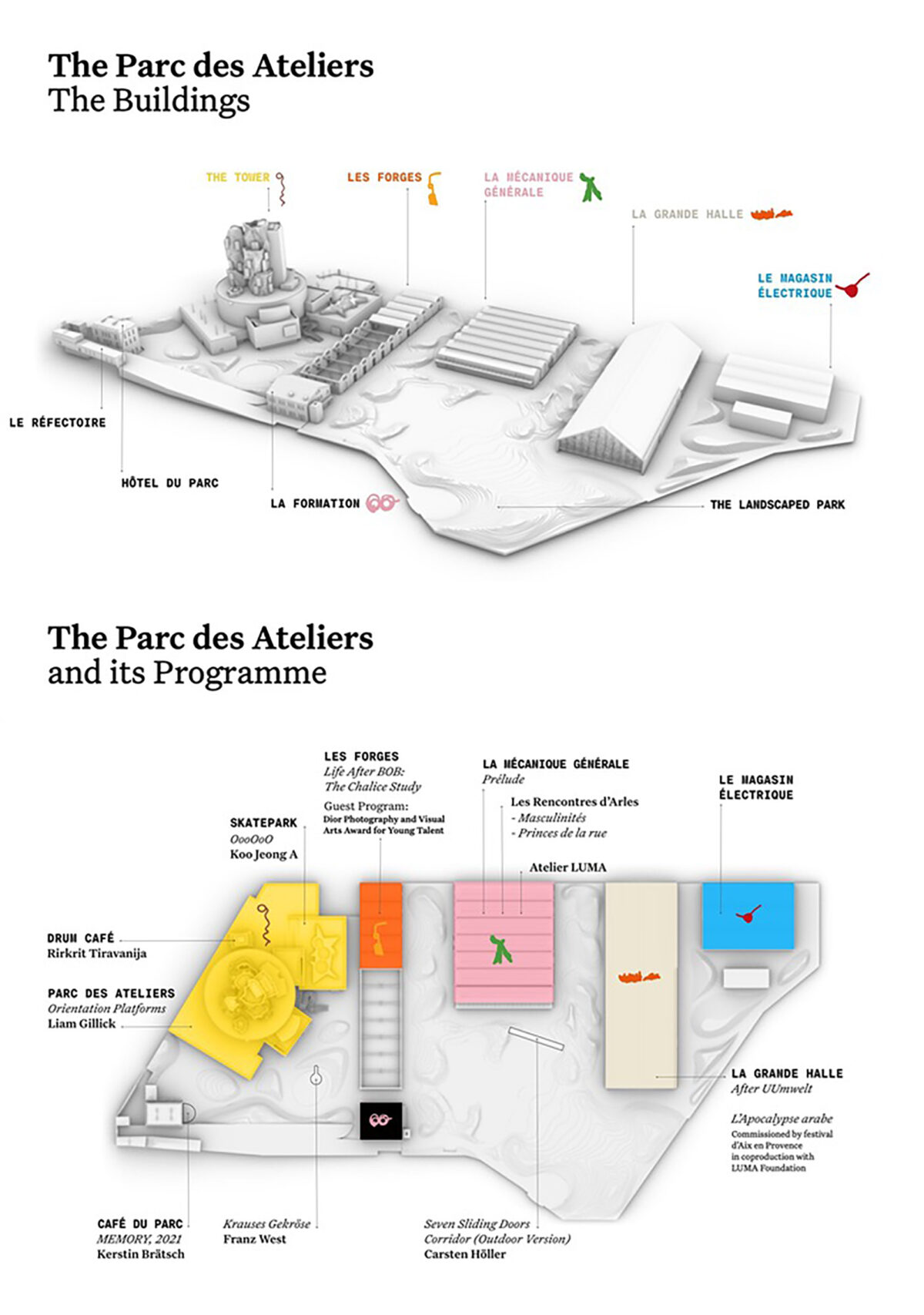
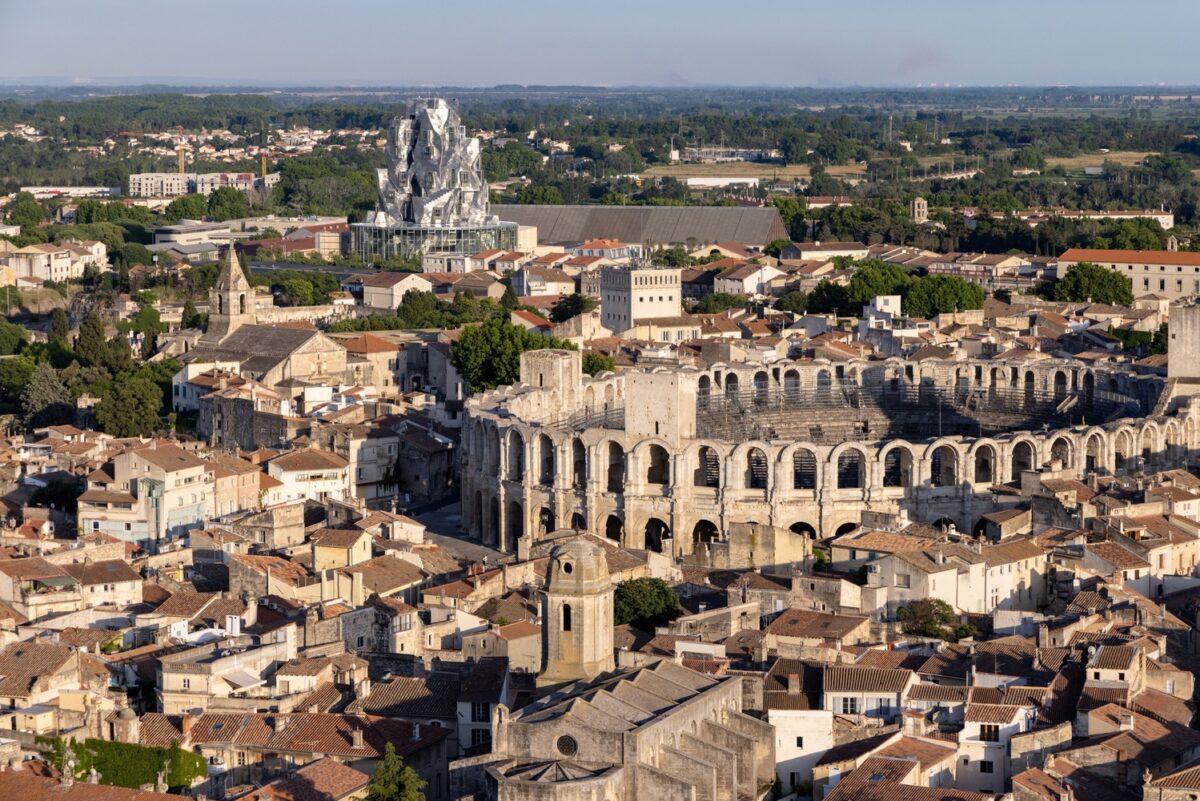
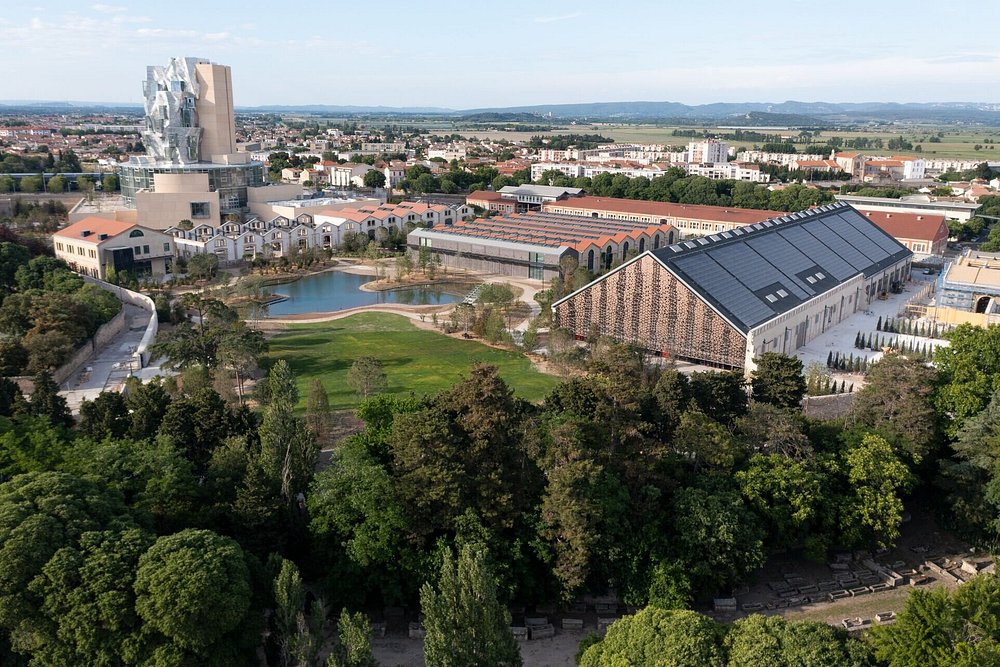
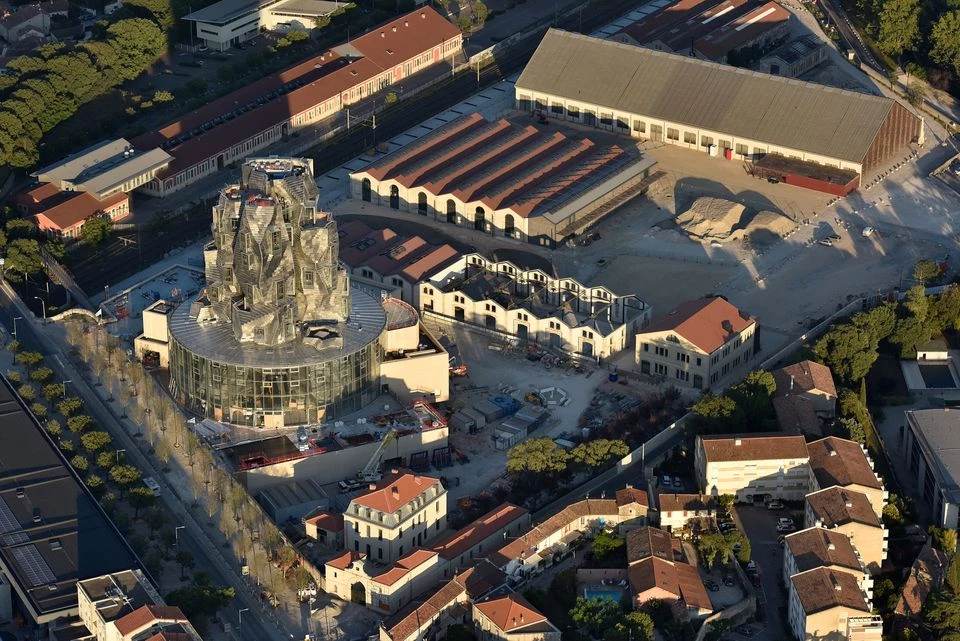
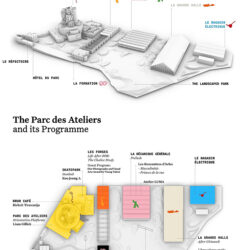
The LUMA Arles Tower rises from the Experimental Campus and Art Center in Southern France, revitalizing the historic railway workshops of Parc des Ateliers.
Concept
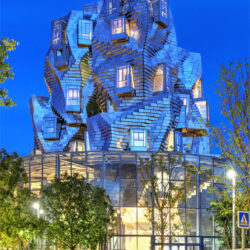
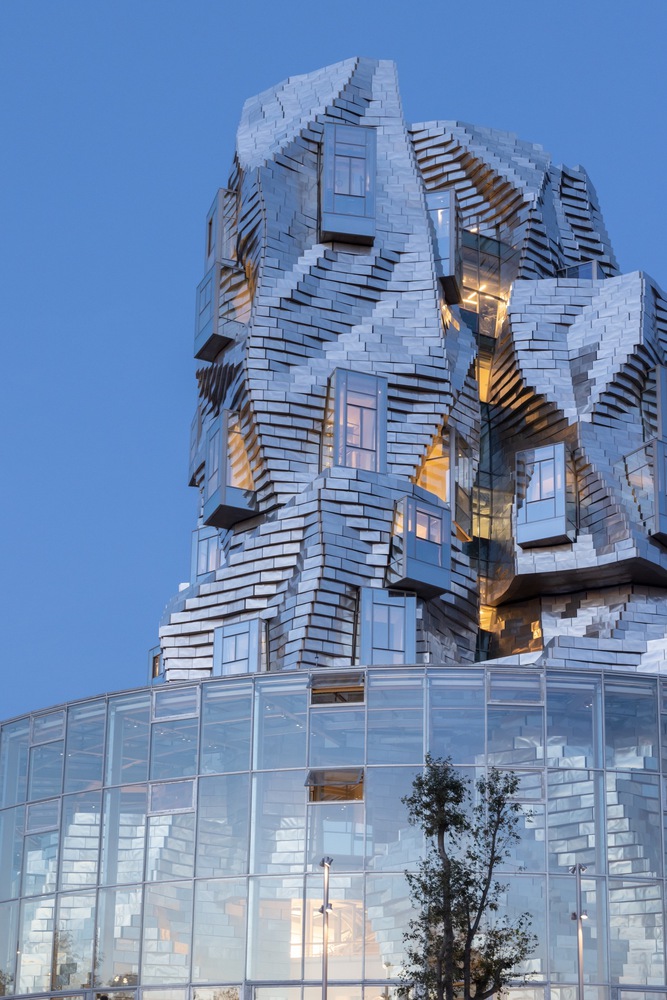
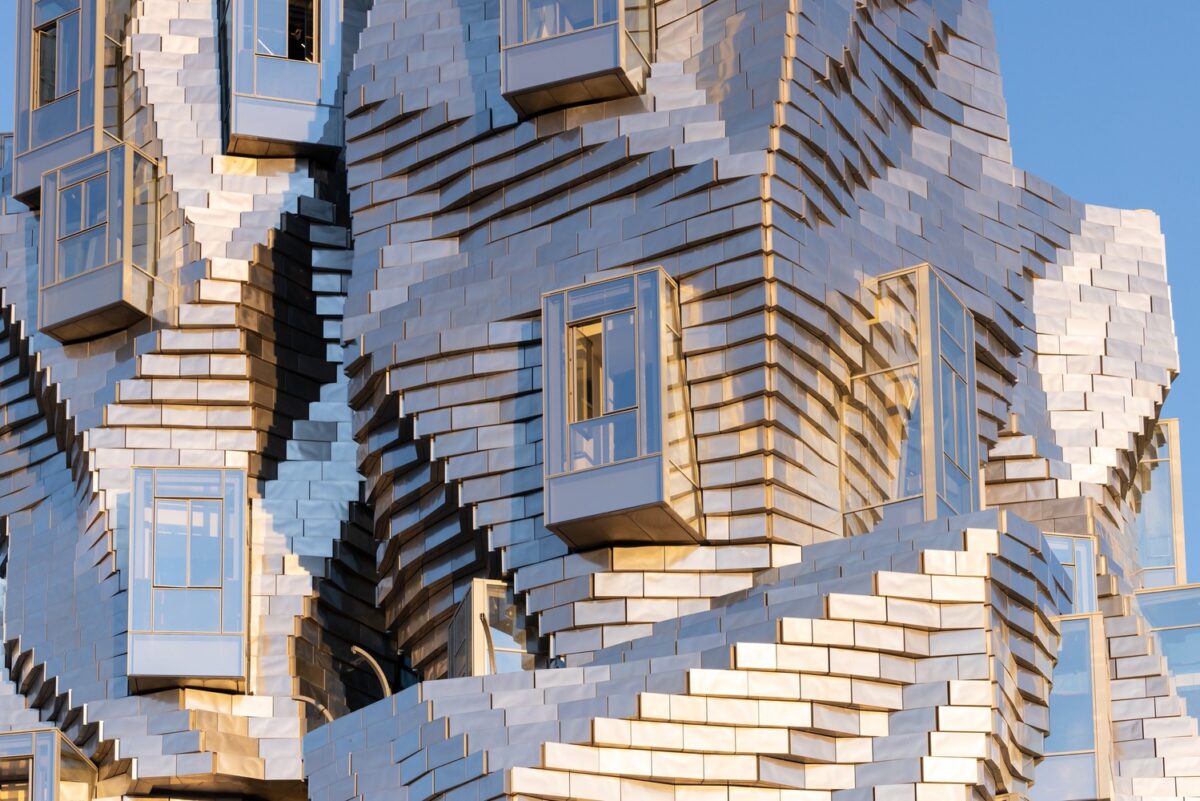
The design draws inspiration from Vincent Van Gogh’s portrayal of the region’s mountains and starry skies. The stainless steel cladding’s form and arrangement reflect these themes, with the pinnacle of the tower inspired by Van Gogh’s “Starry Night,” painted nearby in Saint-Rémy-de-Provence.
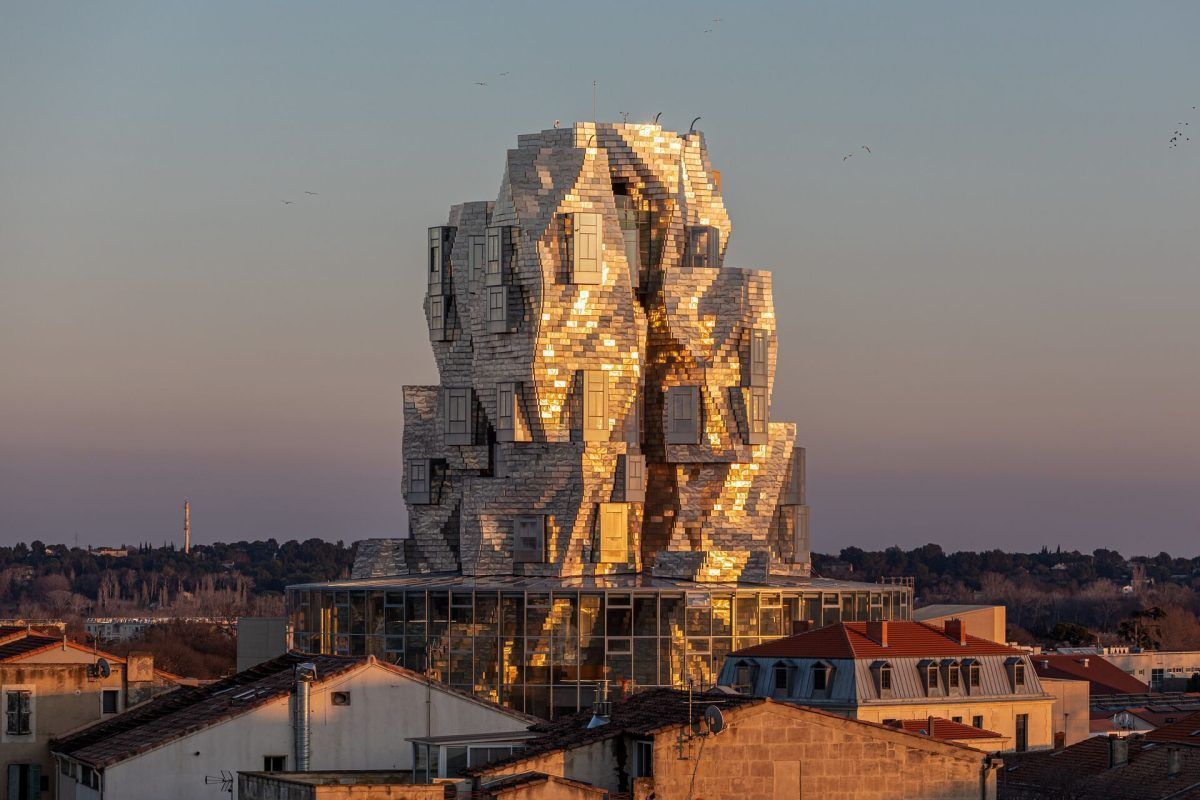
The tower’s irregular facade mirrors the limestone cliffs typical of the area, also echoed in the interior’s geological design elements, like the glazed “faults” that connect the various structures.
“…Our aim was to reflect the local—from Van Gogh’s ‘Starry Night’ to the majestic rocky landscapes. The central drum resembles the layout of a Roman amphitheater…” (Frank Gehry)
Spaces
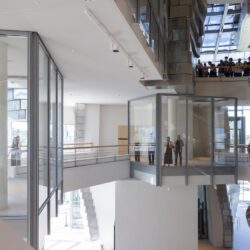
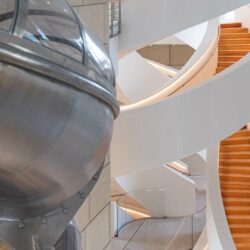
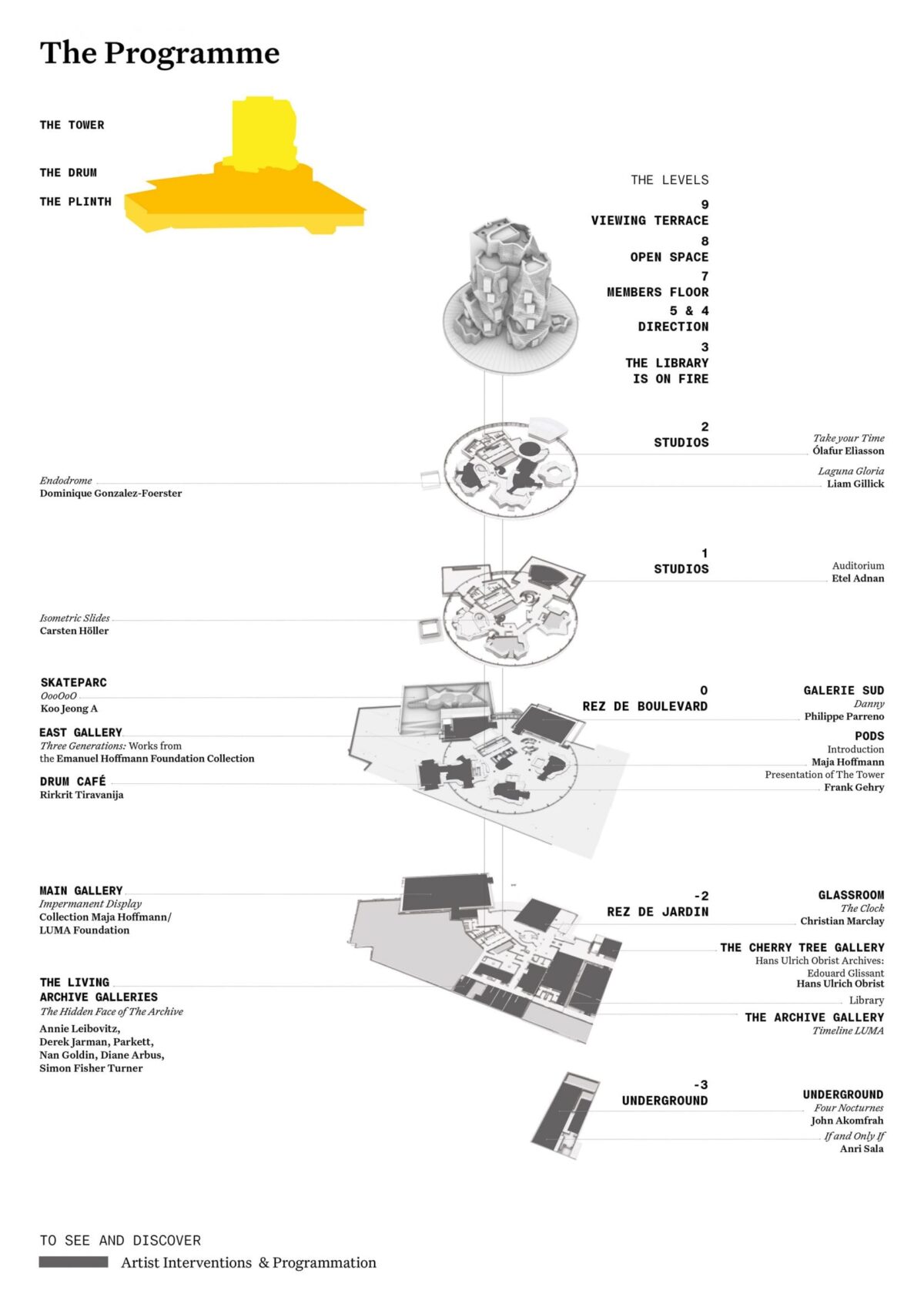
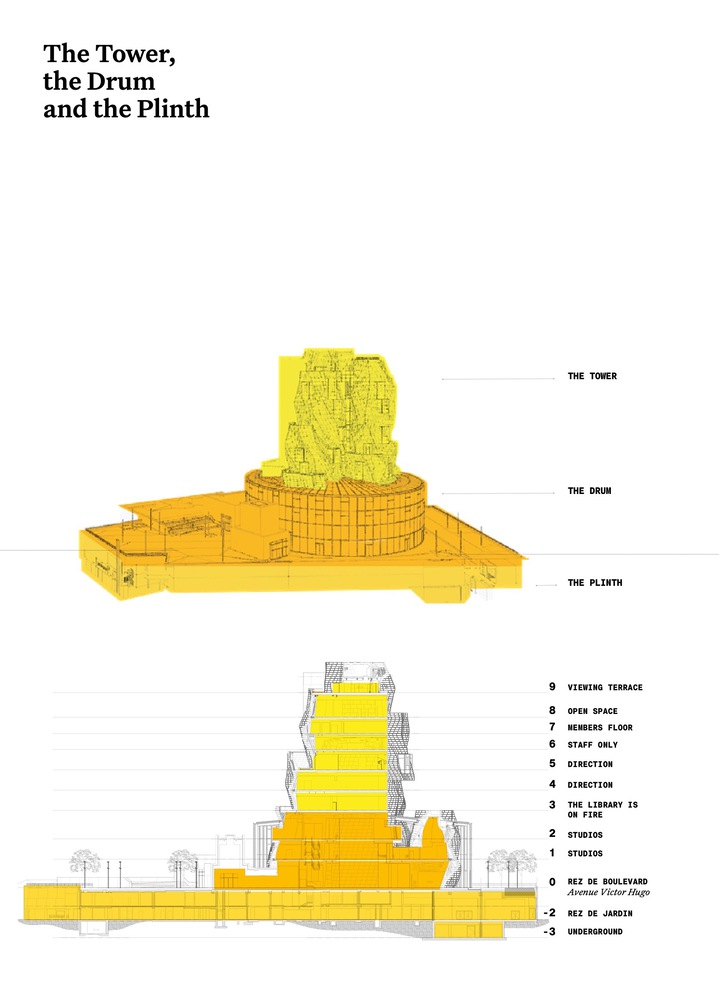
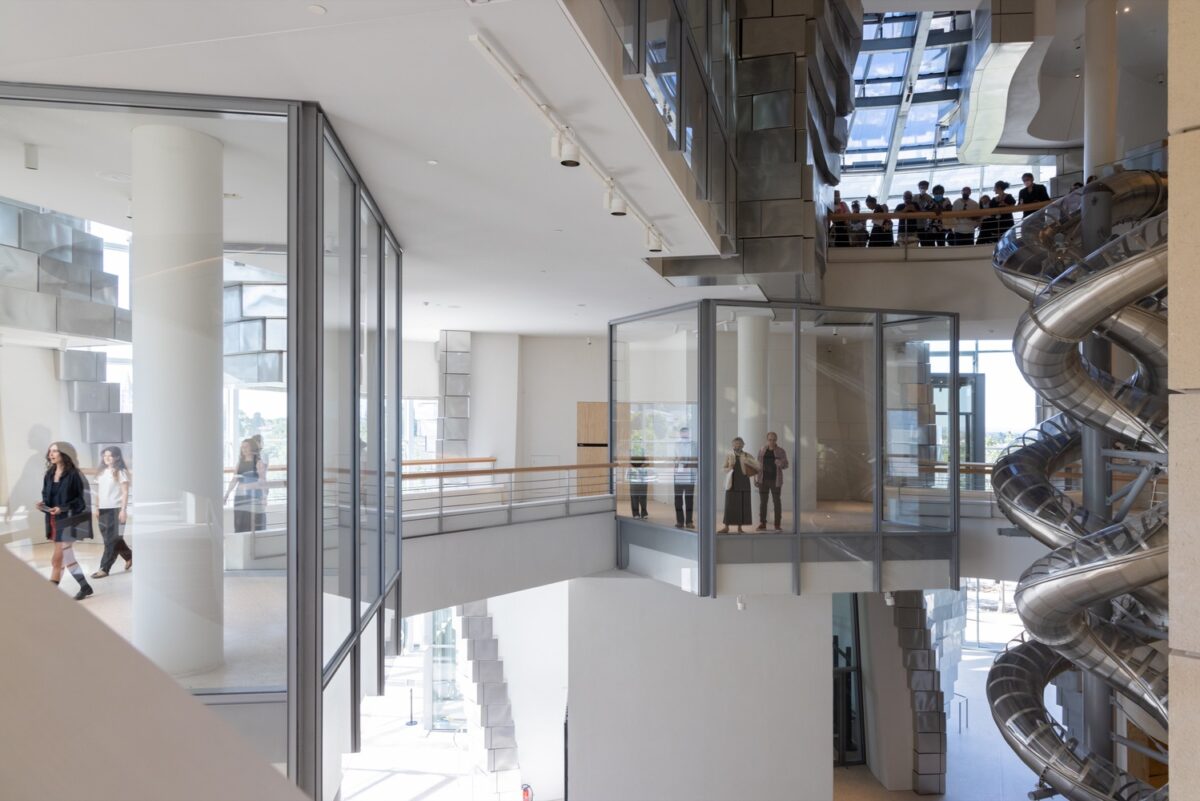
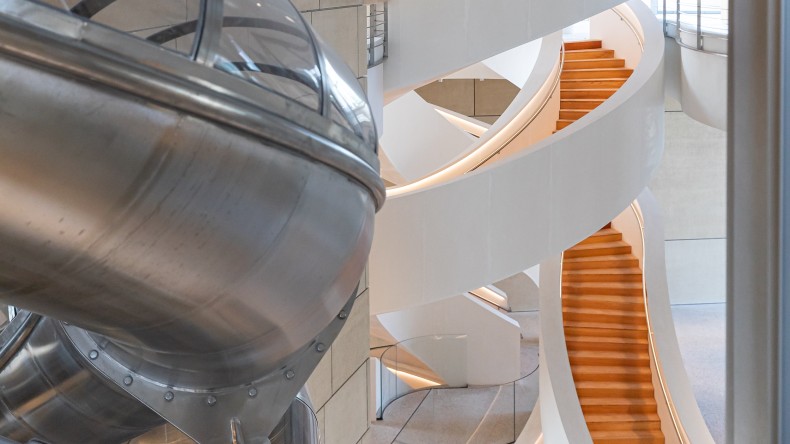
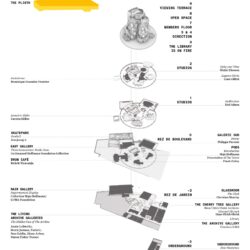
The building offers a variety of multipurpose spaces across its 12 floors, including exhibition halls, research rooms, and event venues. Interior connections are made through elevators, a double helix staircase, and two tube slides by artist Carsten Höller, creating a dynamic entry into this concrete and steel ascent.
The Drum
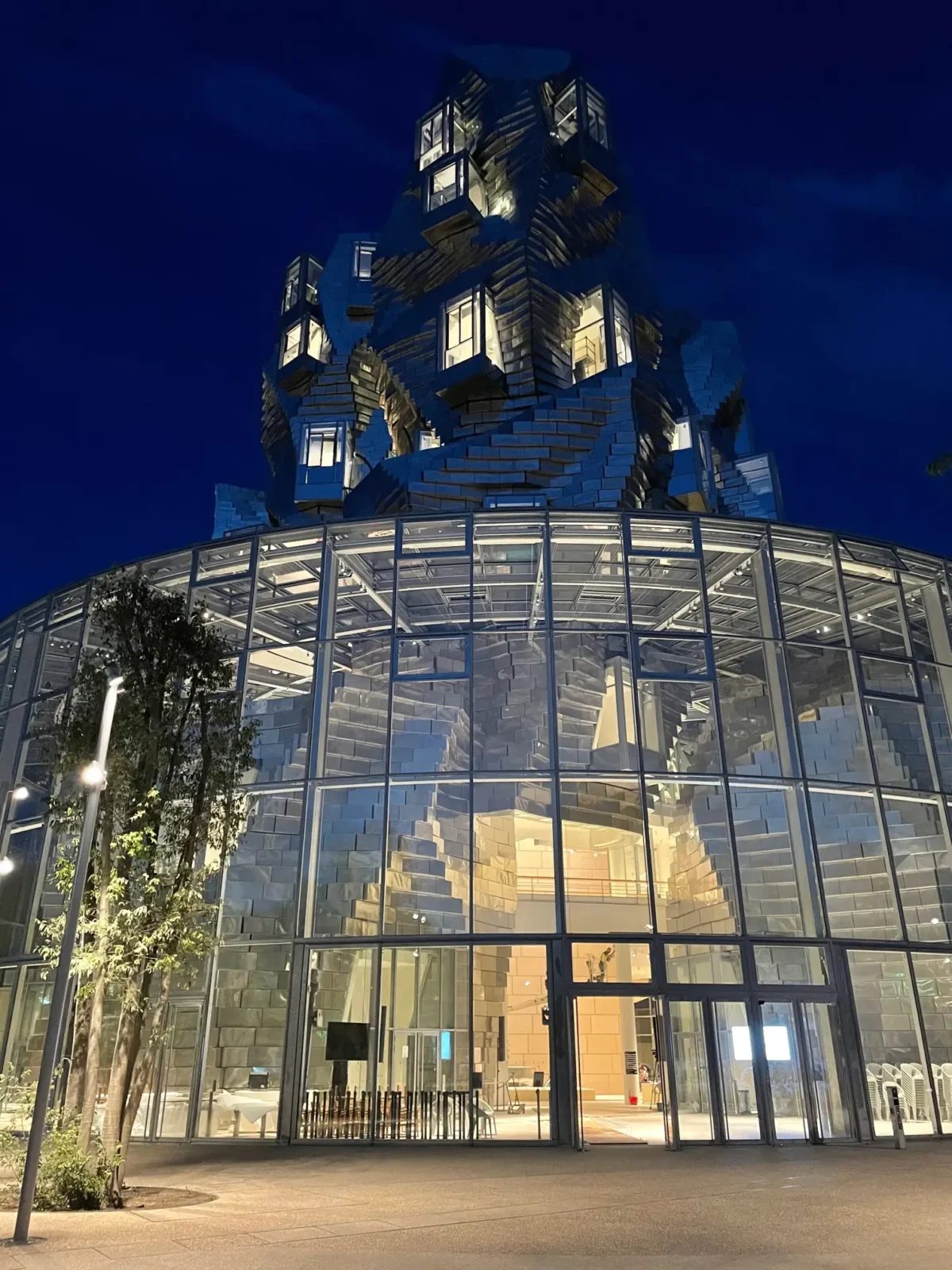
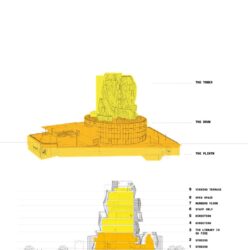
At the heart of the project is the Rotunda or Drum, a 43,000 square foot space acting as both a lobby and a link between the plaza and the main building. This area hosts receptions, common spaces, and transitions visitors through the complex while also accommodating exhibitions and cultural events.
Exhibition Halls
Of the building’s 161,000 square feet, nearly 21,500 square feet are dedicated to exhibition space, highlighted by the Main Exhibition Hall, a column-free area of 10,764 square feet.
The exhibition journey continues in two additional halls, spanning 5,380 and 3,767 square feet respectively.
Additional Amenities
The Tower also features a café, a restaurant, a 150-seat auditorium, artist studios, a library, event rooms, offices, 12,916 square feet of archival space, and a panoramic terrace on the ninth floor.
Outdoors
External gardens with ponds, vegetation, and sculptures integrate seamlessly with the rest of the campus, formerly the site of old railway workshops.
Structure
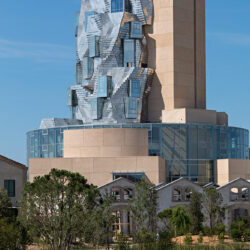
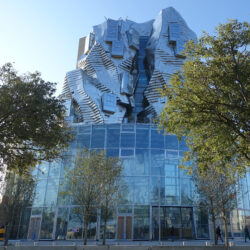
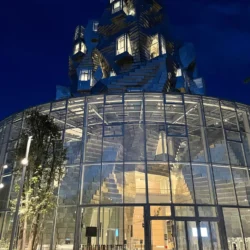
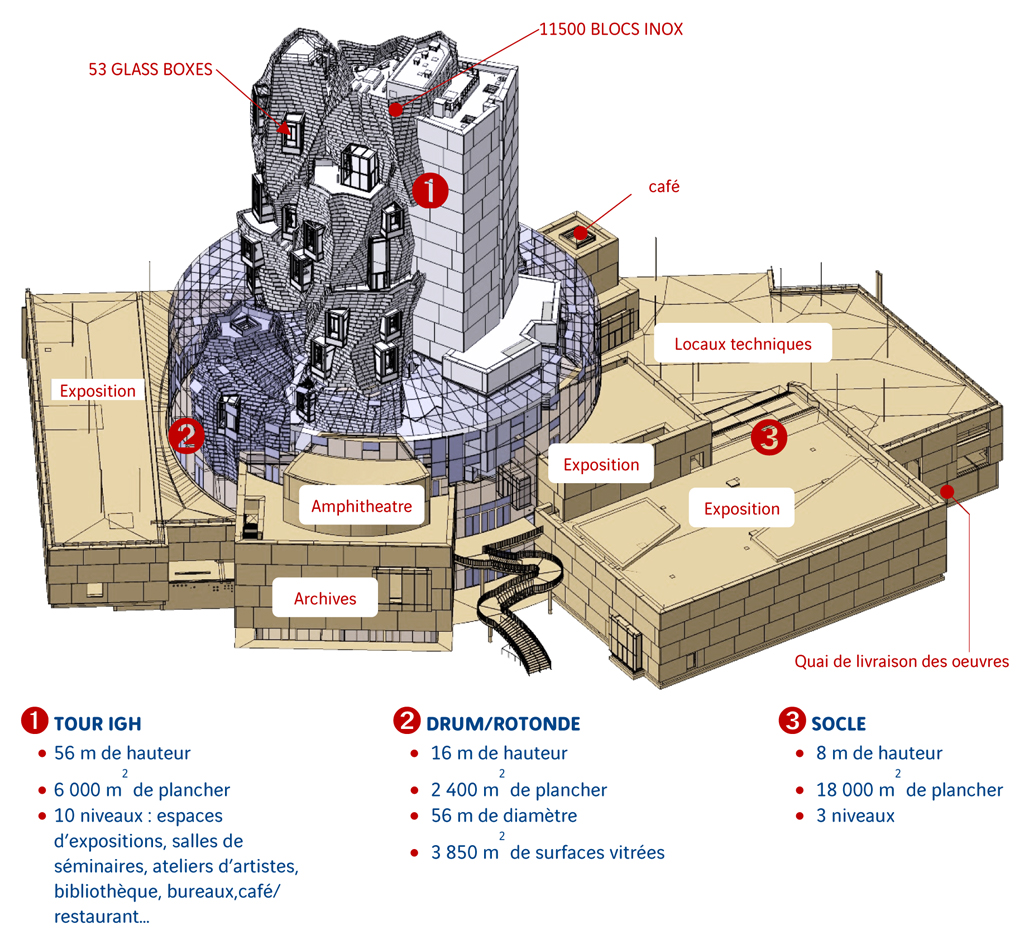
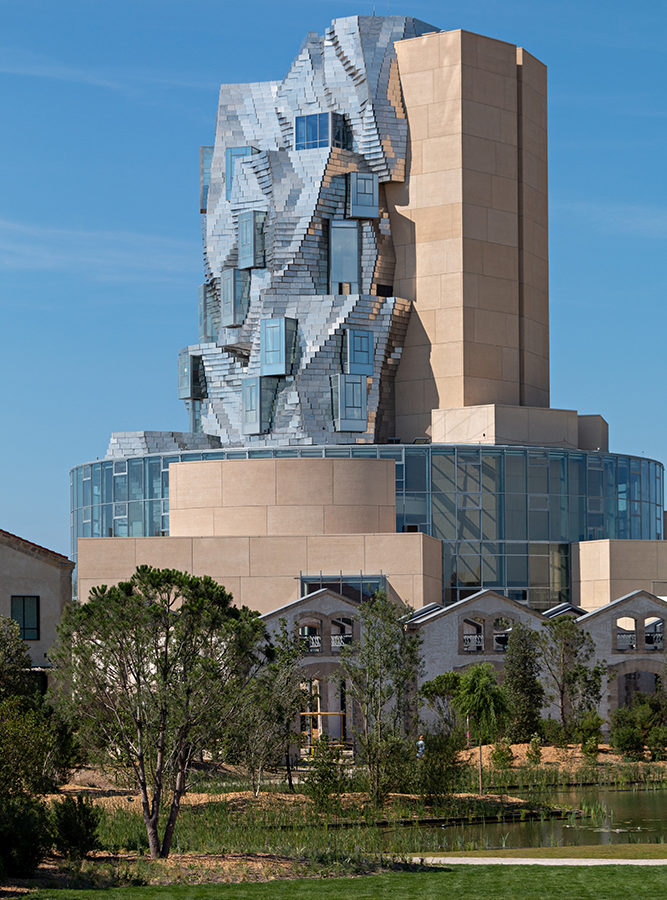
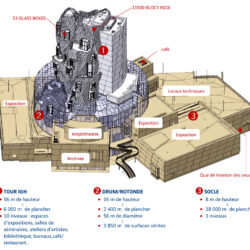
The building consists of three sections: a base crowned by a glass rotunda opening onto a plaza, a volume clad in concrete panels, and a central core opening into four independent towers covered with metallic panels.
The first four floors are encircled by a 177-foot-wide glass structure inspired by ancient Roman theaters, tilted to provide roof access.
The central concrete core supports the structure, while the steel plates are mounted on a sophisticated support system.
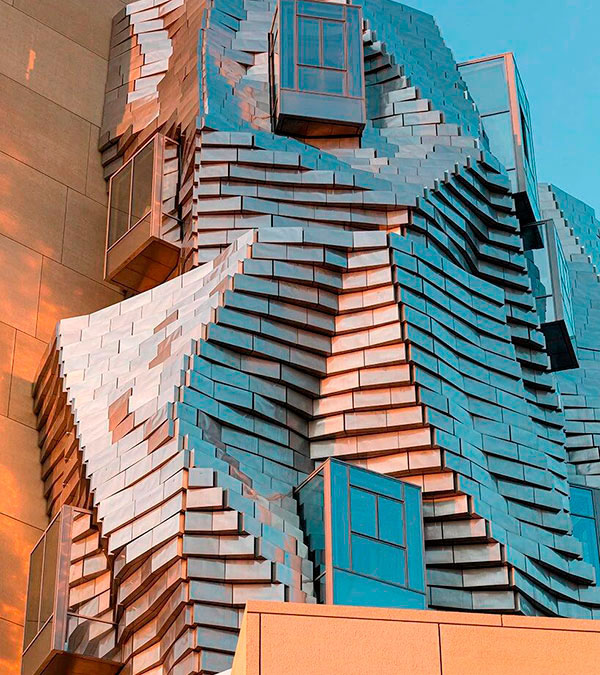
The four 184-foot-tall towers intertwine around the central axis, contrasting with the visible wall of the core, which is clad in large beige-toned concrete panels. This use of concrete is repeated in various volumes around the glass-covered drum at the base.
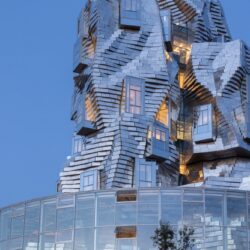
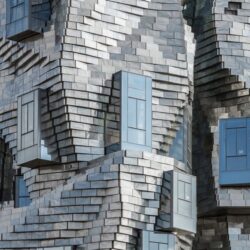
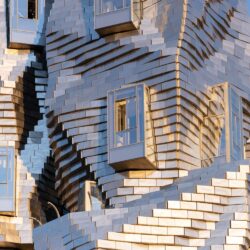
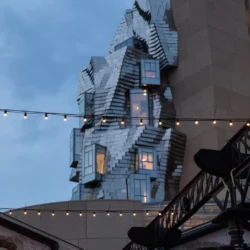
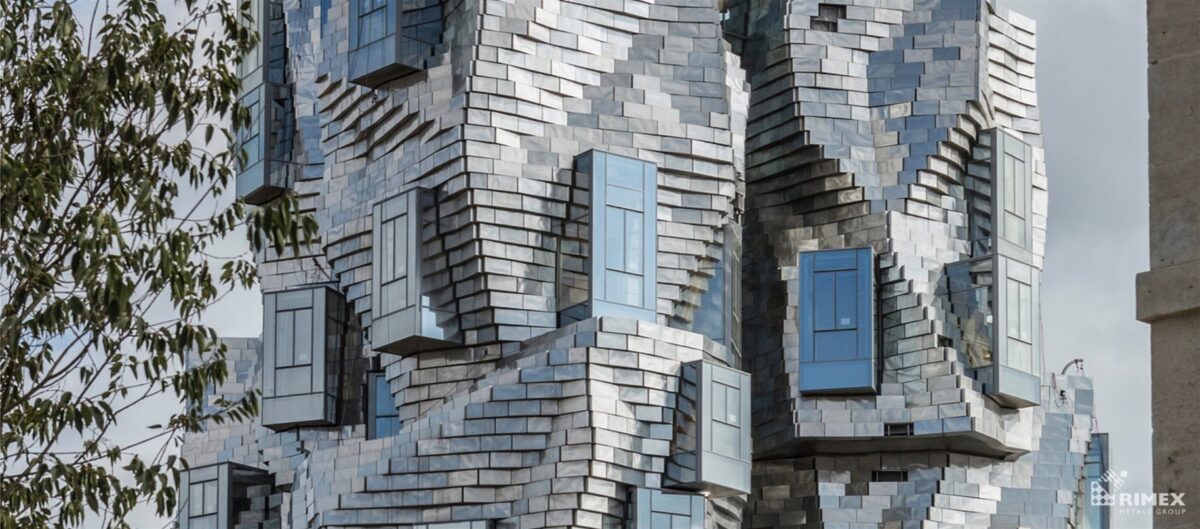
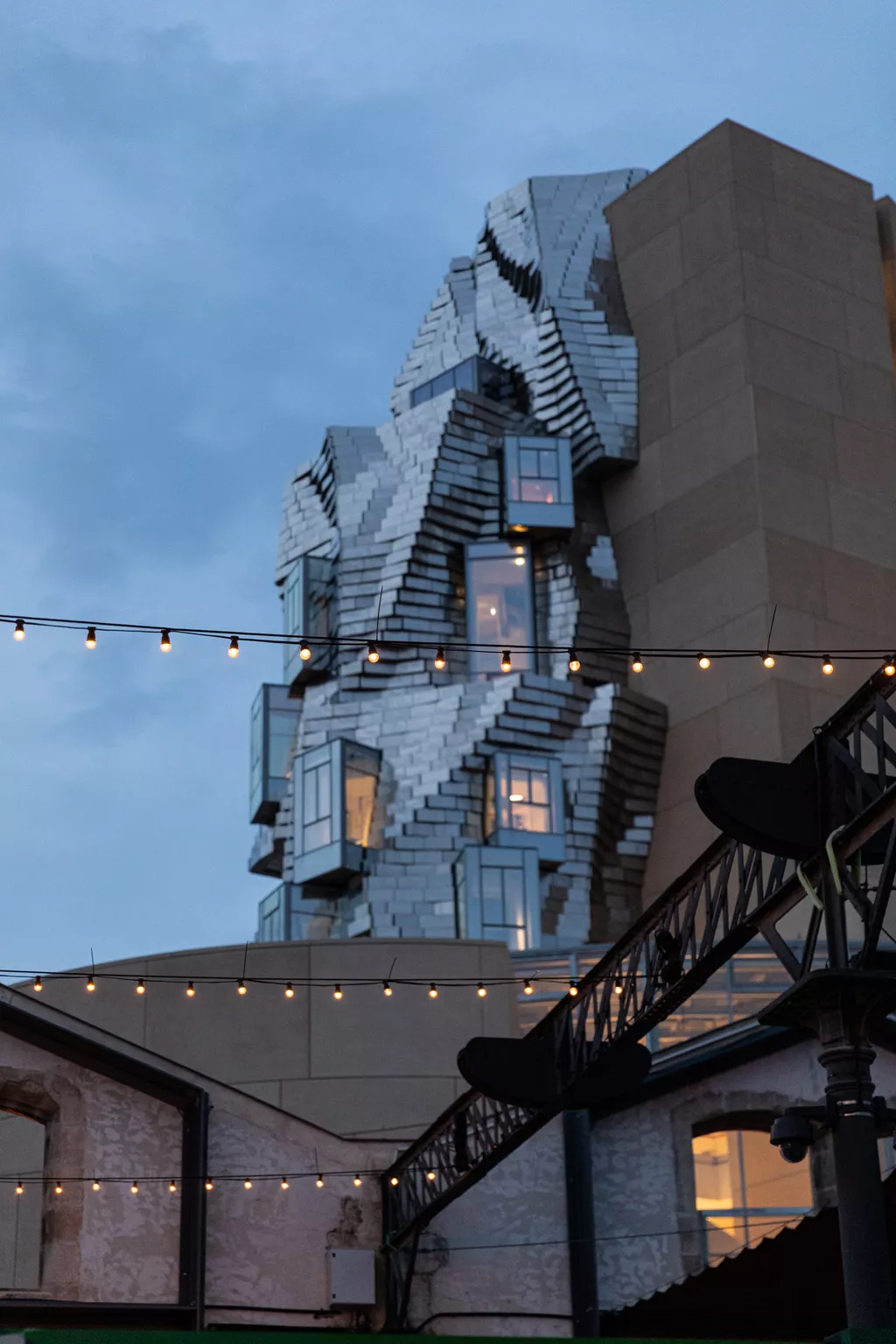
53 glass boxes of varying sizes and shapes, arranged to appear random and protruding, puncture the facade to allow natural light into the interior spaces.
This intricate structure was modeled entirely in 3D.
Materials
The building’s structure and finishes primarily utilize reinforced concrete, steel, and glass.
Steel
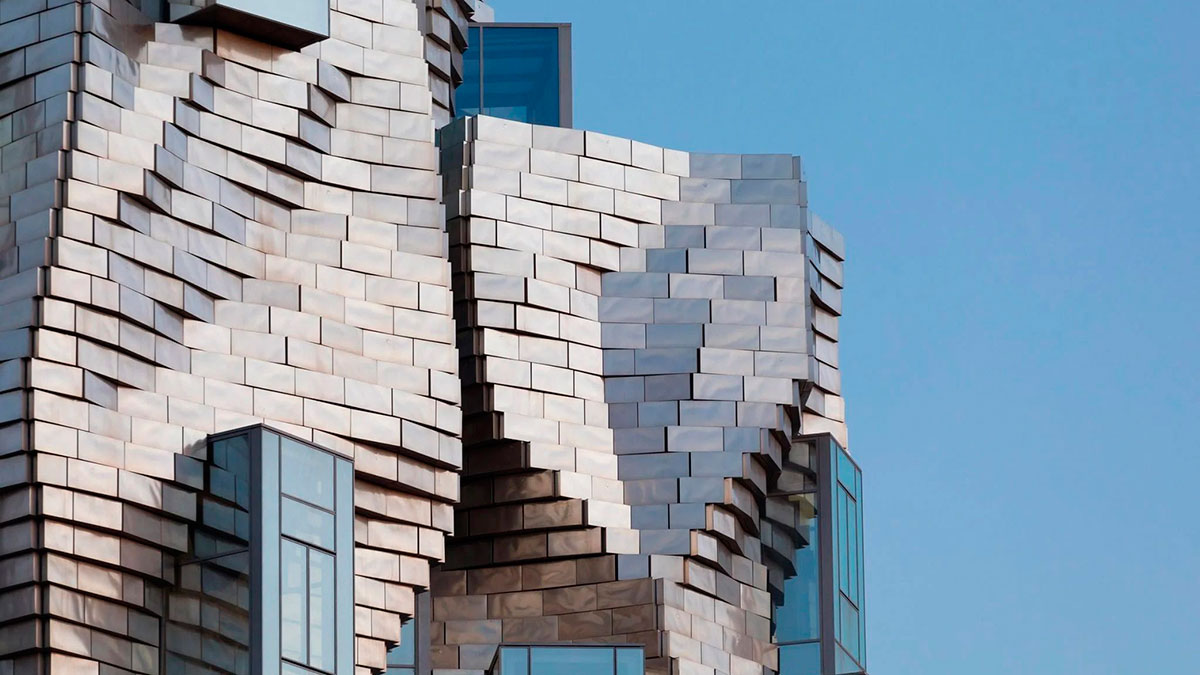
The new buildings’ envelope includes various elements, with the tower’s main component being a facade of blocks covering 53,820 square feet, formed by 11,000 blocks. Its insulating panels play a structural role, supporting the stainless steel cladding blocks.
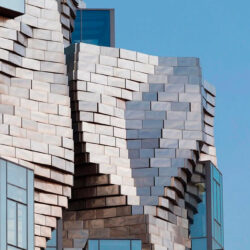
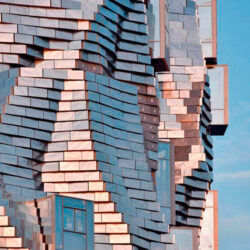
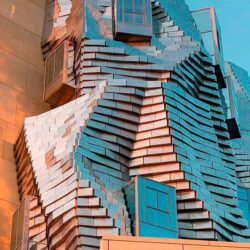
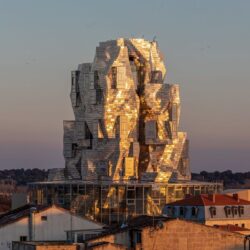
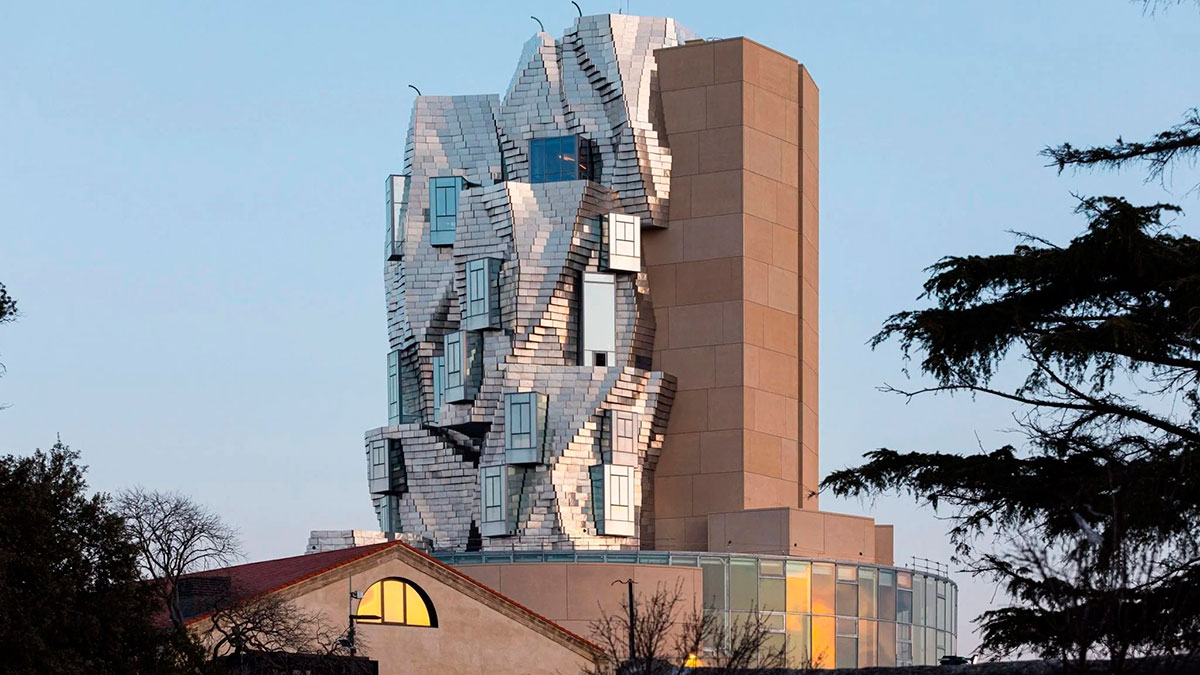
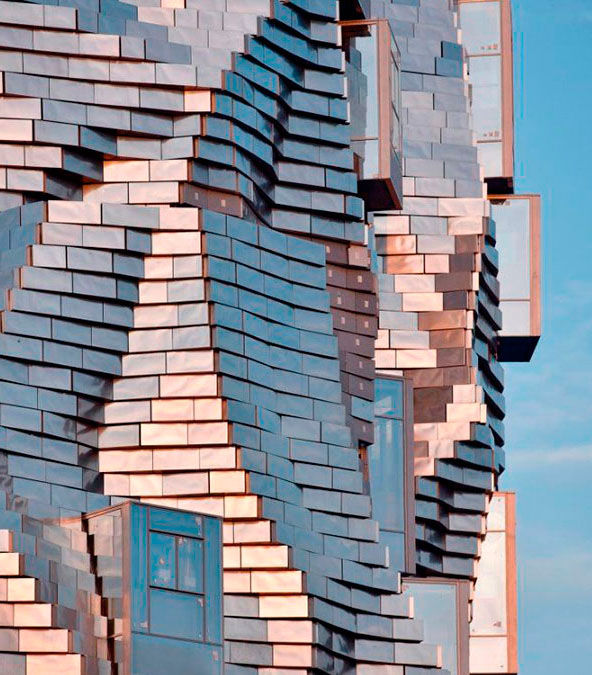
Over 11,000 irregularly arranged stainless steel panels clad the building. At the crown, metallic bricks were used.
The irregular arrangement of these panels interacts with changes in light throughout the day or depending on the viewer’s angle, alternating between silvery reflections during daylight and golden tones as the sun sets.
To achieve the glossy finish, naval industry processes were used in the manufacturing of massive steel hulls. The blocks, with their irregular angles, are mounted on a metal skeleton, ensuring structural stability and a unique play of light throughout the day.
Glass
The tower’s embracing base circular structure is made of glass with invisible joints, resistant to high temperatures.
Concrete
Tinted concrete panels are used on both the exterior and interior, with 1,700 pieces of various sizes and angles, the largest weighing 22,046 pounds, featuring 0.79-inch joints and finishes that mimic the stones of the Alpilles in a seismic zone, requiring extensive R&D work.
The facades of large prefabricated reinforced concrete panels cover a total area of 91,493 square feet, equipped with an external insulation system.
Reinforced concrete was also used in the building’s central core.
Video
Drawings
-
- Ubicación
-
- Programa
-
- Espacios
-
- Diagrama